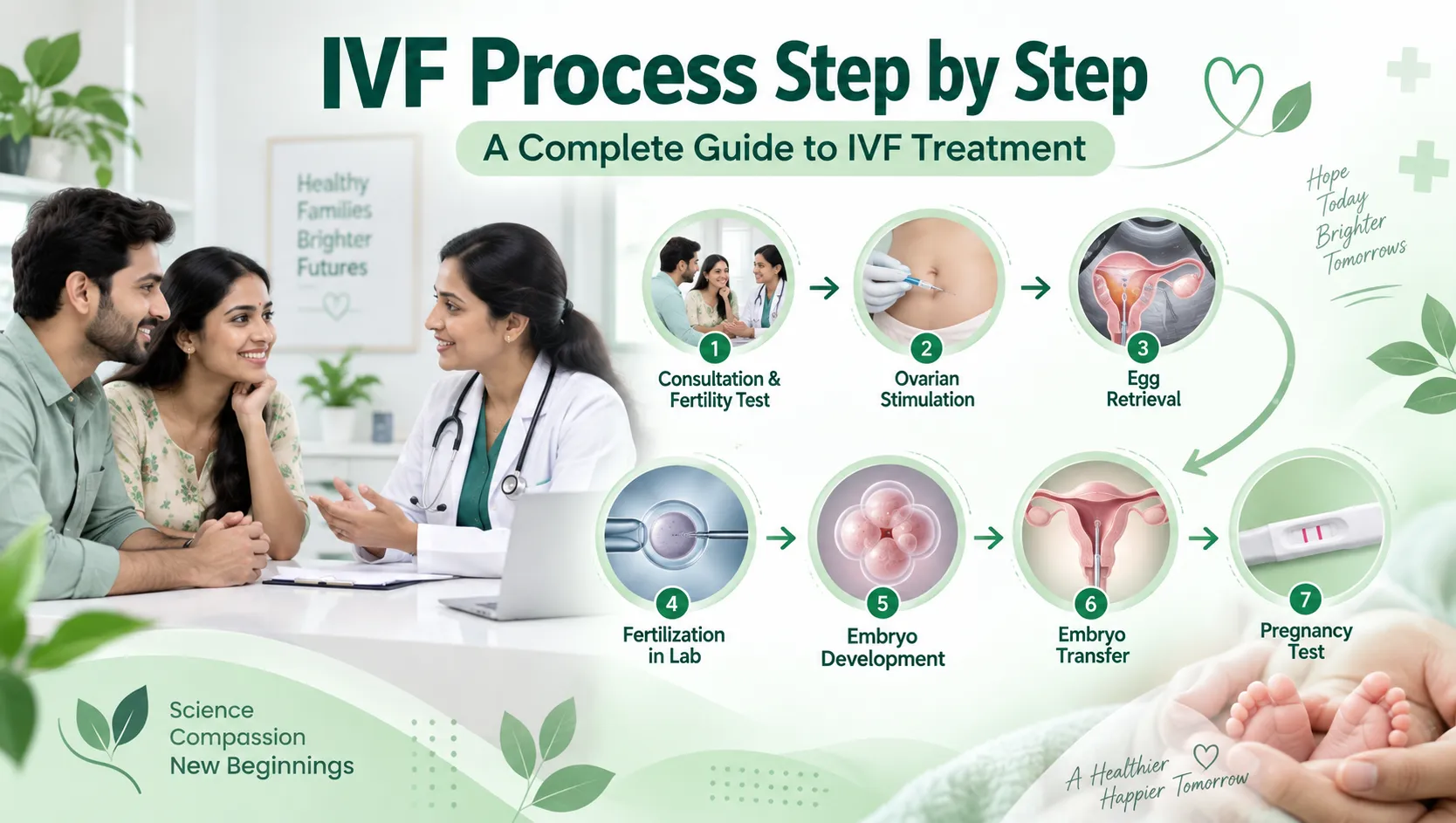
The in vitro fertilization (IVF) process is a multi-step medical treatment that typically takes around 4 to 8 weeks from the initial consultation to the pregnancy test, although the exact timeline may vary depending on the individual treatment plan.
Before starting IVF, it is helpful to understand 6 important things about the IVF treatment process, including the steps involved, monitoring, medications, possible discomfort, treatment timeline and emotional preparation.
IVF treatment usually includes fertility evaluation, ovarian stimulation, monitoring, egg retrieval, fertilisation, embryo development and embryo transfer. Understanding the IVF process step by step can help patients prepare better for each stage and know what to expect during treatment.
What Is IVF Treatment?
In vitro fertilisation (IVF) is a fertility treatment in which eggs are collected from the ovaries and fertilised with sperm in a laboratory. The fertilised egg develops into an embryo, which may then be transferred into the uterus.
IVF treatment may be considered for different causes of infertility, including problems with the fallopian tubes, ovulation difficulties, certain male fertility factors or unexplained infertility. A fertility specialist determines whether IVF is appropriate after evaluating both partners.
IVF Process Step by Step
The general procedures involved in the process of IVF are:
Procedure 1: Consulting and Fertility Tests
Consultation and fertility tests are the first step in the IVF process. This may involve reviewing the reproductive history of both partners together with medical tests like blood tests, ultrasound scans, and semen analysis, among others.
These tests will assist the specialist in knowing the cause of the problem for the development of a suitable treatment strategy.
Procedure 2: Ovarian Stimulation
In this process, certain drugs are used to stimulate the ovary and ensure the development of several eggs. These drugs are chosen based on the treatment strategy of the individual concerned.
The development of several eggs provides chances of successful fertilisation and embryo development.
Step 3: Monitoring the Development of Eggs
Ultrasound scans and, where necessary, blood tests are done to monitor the patient’s response to medication during the ovulation process. It helps the doctor to check the development of the follicles and levels of hormones in order to ensure that there is an appropriate response from the ovaries. Dosage can be changed if necessary.
Step 4: Trigger Shot and Egg Retrieval
After the adequate development of follicles, a trigger shot is administered to promote further development of the eggs. At this point, egg collection takes place at the right time. This is usually done through the use of ultrasound to locate the follicles using a needle.
Step 5: Collection of Sperm
The semen sample is collected from the husband of the patient or a donor in certain cases. Thereafter, the laboratory works to separate the healthy sperm for fertilisation. Sometimes, frozen sperm may be used.
Step 6: Fertilisation
The eggs extracted are fertilized in the lab using the sperm. This can happen in one of two ways: using conventional IVF whereby the eggs and sperm are combined or ICSI whereby a single sperm is directly injected into an egg.
Fertilization is followed by observation of embryo development.
Step 7: Embryos’ Development and Selection
After fertilization, the embryos are kept in the lab and observed while developing over the next few days. Some of the embryos may be at the blastocyst stage by the fifth day.
Embryo development is assessed by the fertility experts who select suitable embryo(s) for implantation in line with the treatment strategy. The suitable embryos may also be frozen.
Step 8: Embryo Transfer
Embryo transfer is the process where an embryo is inserted into the uterus through a thin and flexible catheter. It is typically a short process and usually doesn’t need anesthesia.
Based on certain conditions, the embryo could either be fresh or frozen.
Step 9: Pregnancy Test and Follow-Up
Following embryo transfer, the patient will keep taking any prescribed medications from the infertility doctor and take the required pregnancy test.
The blood test is typically used to check if there is a pregnancy. In case there is a positive outcome, further tests may be advised.
How Long Does the IVF Process Take?
IVF procedure time depends on the individual. It has various stages like fertility tests, egg stimulation, monitoring, egg extraction, fertilization, and implantation.
The time taken by the entire process may vary depending on whether you are undergoing the fresh or frozen embryo transfer process. Your infertility doctor will be able to give you the exact information according to your treatment plan and response to the drugs used.
What to Expect During IVF Treatment?
IVF therapy requires routine visits for monitoring as well as drugs and procedures like egg harvesting and embryo transfer. Some individuals might feel discomfort, bloating or cramps at various stages of treatment.
Another difficulty faced by individuals undergoing IVF is the emotional stress that comes along because one cannot predict the results. The right way to cope with it is to follow the regimen of drugs, visit monitoring appointments and talk about any worries to the fertility team.
Conclusion
Understanding the IVF process step by step can help patients feel more prepared for the treatment journey. From fertility assessment and ovarian stimulation to egg retrieval, fertilisation, embryo transfer and the pregnancy test, each stage is carefully planned according to the patient’s individual needs.
Since every fertility journey is different, the exact IVF treatment plan, medications and timeline may vary from one patient to another.
If you are planning IVF and looking for the best IVF specialist in Ghaziabad, you can consult Dr. Smita Jain for fertility evaluation, personalised guidance and a treatment plan based on your reproductive health and fertility needs.
Frequently Asked Questions About the IVF Process
1. What is the best age to consider IVF treatment?
IVF success is generally influenced by age, particularly the age of the woman and ovarian reserve. However, the right time to consider IVF depends on the cause and duration of infertility, medical history and fertility test results.
2. Do I need to take leave from work during IVF treatment?
Many patients can continue working during most of the IVF process. However, time off may be needed for monitoring appointments, egg retrieval or if you experience discomfort after a procedure.
3. Can I exercise while undergoing IVF?
Light physical activity may be suitable for many patients, but strenuous exercise may need to be limited during ovarian stimulation because the ovaries can become enlarged. Follow the advice given by your fertility specialist.
4. Is bed rest required after embryo transfer?
Routine prolonged bed rest is generally not required after embryo transfer. Most patients can return to normal light activities according to their doctor's instructions.
5. Can I travel during an IVF cycle?
Travel may be possible during certain stages, but IVF requires scheduled scans, medications and procedures. Discuss travel plans with your fertility team before making arrangements.
6. What should I eat during IVF treatment?
A balanced diet containing vegetables, fruits, whole grains, proteins and healthy fats is generally recommended. There is no single food or diet that can guarantee IVF success.
7. Can couples have intercourse during IVF treatment?
Recommendations may vary depending on the stage of treatment and individual circumstances. Your fertility specialist may advise temporary restrictions during ovarian stimulation, around egg retrieval or after embryo transfer.
8. What happens to extra embryos after IVF?
Suitable embryos that are not transferred may sometimes be frozen for possible future use. Whether embryos can be frozen depends on their development and the treatment plan.
9. How many embryos are transferred during IVF?
The number of embryos transferred is decided individually based on factors such as age, embryo quality, medical history and the risk of multiple pregnancy. Transferring more embryos is not always better.
10. What is the difference between fresh and frozen embryo transfer?
A fresh embryo transfer takes place within the same treatment cycle in which eggs are collected. A frozen embryo transfer uses an embryo that was previously frozen and is transferred in a later cycle.
11. What happens if no embryos develop after fertilisation?
If suitable embryos do not develop, embryo transfer may not be possible in that cycle. The fertility specialist can review the cycle and discuss possible reasons and future treatment options.
12. What happens if the first IVF cycle is unsuccessful?
An unsuccessful IVF cycle does not necessarily mean further treatment cannot work. The doctor may review ovarian response, fertilisation, embryo development and other factors before recommending the next step.
13. Can IVF medications cause side effects?
Some patients may experience bloating, headache, mood changes, injection-site discomfort or abdominal heaviness. Contact your fertility team if symptoms are severe or unusual.
14. What should I do if I miss an IVF injection?
Do not automatically take an extra dose. Contact your fertility clinic as soon as possible because the correct action can depend on the medication and where you are in the treatment cycle.
15. Does IVF increase the chance of twins?
Multiple pregnancy can occur with IVF, particularly when more than one embryo is transferred. The fertility specialist considers this risk when deciding the appropriate embryo-transfer strategy.
16. Does IVF guarantee pregnancy?
No. IVF can help people facing infertility, but it does not guarantee pregnancy. The outcome depends on several individual factors, including age, reproductive health, embryo development and other fertility-related factors.