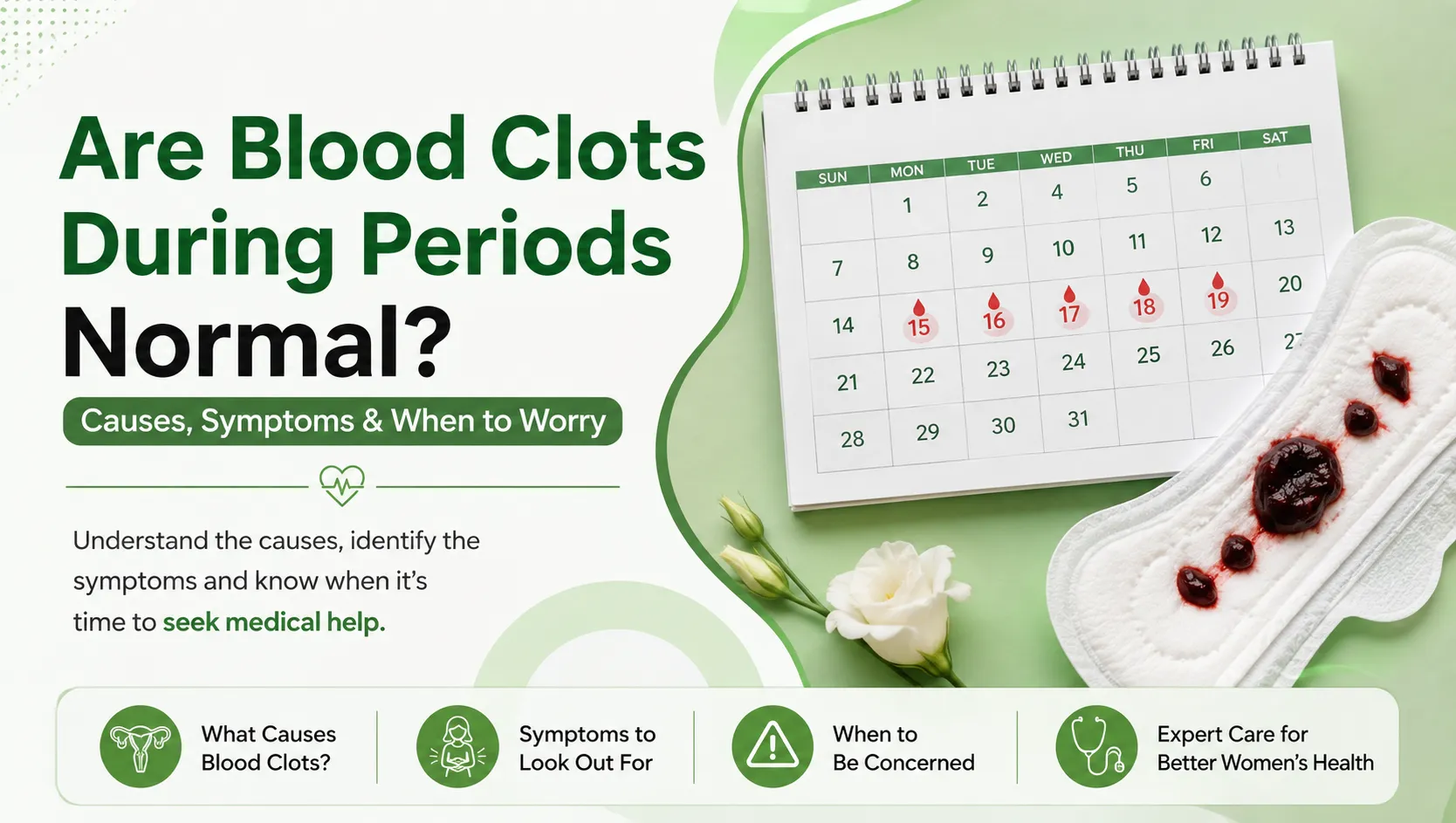
Small blood clots smaller than a coin or a quarter are normal during heavy flow days, but large clots require medical attention.
Do you have blood clots in periods and wonder if they are normal? Thick, jelly-like clots can be concerning, especially if you have never experienced them before. In many cases, clots in periods can occur during the days when menstrual flow is at its heaviest.
Occasionally, large or frequent clots during periods can indicate an underlying gynecological issue and may require medical evaluation. Understanding why periods clots happen, when they are normal, and when they may be a concern can help you better understand your menstrual health.
Are Blood Clots During Periods Normal?
Yes, it is common to have blood clots in your period, especially for the first few days when menstrual flow is at its peak. Period blood clots consist of blood and tissue from the lining of your uterus, and proteins that help with clotting.
Generally, blood clots that are small and infrequent do not pose any cause for concern. However, frequent large clots, as well as heavy and painful periods, may warrant the need for a gynecological evaluation.
Jelly-Like Blood Clots During the Period: Is It Normal?
Many women describe jelly-like blood clots during periods, which, in most cases, are quite normal.
Menstruation involves the shedding of the uterine lining. When blood flow is heavy, the body’s natural anticoagulants may be unable to prevent all blood from clotting. Because of this, thick and jelly-like clots are more likely to form.
Small, dark/jelly-like blood clots are typically viewed as normal. However, if clots are consistently large, are accompanied by a lot of bleeding, and occur with a significant amount of pain, then those cases warrant an assessment by a healthcare professional.
What Do Large Blood Clots During a Period Mean?
Many women wonder, "What do large blood clots during a period mean?"
The size of the clot could give many hints. The presence of a clot during an exceptionally heavy menstrual period from time to time is relatively normal.
Nevertheless, the frequent occurrence of large clots bigger than a quarter (approximately 2.5 cm) could indicate heavy menstrual bleeding or even a health disorder.
Some of the conditions that may cause large clots to form are:
-
Uterine fibroids
-
Adenomyosis
-
Endometriosis
-
Hormonal disorders
-
Complications during pregnancy
-
Bleeding disorders
It is crucial to see a doctor when you are experiencing a lot of clotting during your menstrual cycle.
Why Do Blood Clots Occur During Periods?
Blood clots during menstruation can arise due to various factors.
Heavy Bleeding
One factor contributing to period clots is heavy menstrual bleeding. This occurs when the blood moves fast, providing ample time for clotting before exiting the uterus.
Hormonal Issues
Estrogen and progesterone hormones are involved in controlling the monthly menstrual process. Disruption of this hormonal balance causes an overly thickened uterine wall, which leads to heavy bleeding.
Uterine Fibroids
These are benign tumors growing inside the uterus. They tend to result in heavy menstrual bleeding and clot formation.
Adenomyosis
Adenomyosis is the abnormal growth of endometrial tissue within the myometrium. This condition typically results in heavy and painful menstruation and blood clotting.
Endometriosis
Women may experience painful and severe menstrual bleeding with blood clotting and may even have endometrial tissue growing in sites away from the uterus with endometriosis.
Miscarriage or Pregnancy-Related Causes
When pregnancy is possible in some cases, heavy bleeding with large clots may be related to an early miscarriage or another pregnancy-related complication. Medical evaluation is important in such situations.
When Are Blood Clots During Periods Considered Normal?
However, blood clots while on your period may be described as being normal, where:
-
They are small in nature
-
They happen sometimes
-
They take place during heavy bleeding days
-
They are not accompanied by extreme pain
-
They do not interfere with your day-to-day activities
Most women have had their share of blood clots without having a disease at all.
When Should You Worry About Period Blood Clots?
Although most blood clots do not pose any harm, some signs cannot be overlooked.
You should watch out for:
-
Consistently large blood clots
-
Several large blood clots per menstrual period
-
Voluminous bleeding
-
The necessity to change your pads/tampons every hour
-
Periods that extend beyond seven days
-
Presence of severe pain in the pelvis region
-
Feelings of dizziness, fatigue or weakness
Such signs could mean there is a lot of blood loss.
How Are Abnormal Period Blood Clots Diagnosed?
When your doctor suspects that you have problems with excessive blood clotting, he may ask you to undergo some tests to understand what causes it.
They may consist of:
-
Medical history
-
Pelvic exam
-
Ultrasound scan
-
Blood work to rule out anemia or hormone levels
-
Other examinations
It will help detect whether there are structural abnormalities, hormonal disorders, or other diseases behind excessive clotting.
Treatment for Blood Clots During Periods
The treatment will depend on the cause and severity of the condition.
Observation
In case the clots are small and appear sometimes, then treatment may not be necessary.
Medication
There are certain medicines that can assist in reducing menstrual bleeding and relieve symptoms.
Hormonal Therapy
Contraceptive pills, hormonal IUDs, or other hormone therapies may be advised to regulate the flow.
Treatment of Associated Disorders
Disorders like fibroids, adenomyosis and endometriosis may need special attention.
Lifestyle Changes
Simple lifestyle changes may prove beneficial:
-
Keep yourself well-hydrated
-
Take iron-rich foods
-
Monitor your menstrual cycle
-
Have a healthy body weight
Follow your doctor's advice regarding treatment
When Should You See a Gynecologist?
Visiting a gynecologist would be wise when:
-
You commonly suffer from large blood clots
-
You are suddenly having a very heavy menstrual flow
-
You are experiencing severe period cramps
-
You feel weak and breathless because of the heavy flow during menstruation
-
Your menstrual cycle changes dramatically
-
You suspect yourself of being pregnant and you are bleeding heavily with clots
This would assist in early detection and avoid further complications like anemia.
Conclusion
Small and occasional blood clots in periods, especially during heavier-flow days, can be a normal part of menstruation. However, large, frequent or painful clots, particularly when accompanied by very heavy bleeding or other unusual symptoms, should not be ignored.
Conditions such as fibroids, adenomyosis, endometriosis and hormonal changes can sometimes contribute to heavy bleeding and larger clots. If you notice a significant change in your usual menstrual pattern or experience persistent clots during periods, a gynecological evaluation can help identify the underlying cause.
If you are concerned about heavy periods, periods clots or recurring menstrual problems, you can consult Dr. Smita Jain, the best gynecologist in Ghaziabad, for personalized evaluation and appropriate treatment guidance.
Frequently Asked Questions (FAQs)
1. Are blood clots during periods normal?
Yes, small and occasional blood clots can be normal, particularly during days of heavier menstrual flow. However, large or frequent clots may need medical evaluation.
2. What size of period blood clot is considered normal?
Small clots, particularly those smaller than about 2.5 cm, can occur during heavier-flow days. Repeatedly passing larger clots may be associated with heavy menstrual bleeding and should be discussed with a gynecologist.
3. Can stress cause blood clots during periods?
Stress can affect the menstrual cycle and may contribute to changes in bleeding patterns. However, frequent or large clots should not automatically be attributed to stress.
4. Can anemia cause blood clots during periods?
Anemia does not usually cause menstrual clots. However, heavy menstrual bleeding can lead to iron-deficiency anemia, which may cause tiredness, weakness or shortness of breath.
5. Why are period blood clots sometimes dark in color?
Blood can become darker when it takes longer to leave the uterus. Dark red or brownish clots can occur during menstruation and are not necessarily a sign of a health problem.
6. Is it normal to have blood clots with period pain?
Small clots with mild period cramps can occur during normal menstruation. Severe or worsening pain, particularly with heavy bleeding and frequent large clots, should be evaluated by a gynecologist.
7. Can period blood clots be caused by fibroids?
Yes. Uterine fibroids can contribute to heavy menstrual bleeding and may be associated with larger or more frequent blood clots.
8. Can PCOS cause blood clots during periods?
PCOS can cause irregular periods and changes in menstrual bleeding. If periods are unusually heavy or accompanied by frequent large clots, a gynecological evaluation can help identify the cause.
9. Are blood clots during periods normal after childbirth?
Menstrual patterns can change after childbirth, particularly while breastfeeding. However, unusually heavy bleeding or large, frequent clots should be discussed with a healthcare professional.
10. Can blood clots during periods affect fertility?
Period blood clots themselves do not usually affect fertility. However, conditions that cause heavy bleeding and clots, such as fibroids, adenomyosis or endometriosis, can sometimes be associated with fertility problems and may require evaluation.